India and Norway Hold First Post-TEPA Trade Dialogue in Delhi
Bilateral merchandise exports reach US$ 439 million as TEPA opens duty-free access for 581 agricultural product lines in Norway.
Ask India how much it exports to Norway and you get one number: US$ 439 million in 2025. Ask Norway how much it imports from India and you get another: US$ 897 million. Both governments stand behind their figures. The gap — India’s trade statistics recording barely half of what Norway says it buys — is not an error. It is a map of how Indian goods actually enter Scandinavia. (See also: tepa tariff beneficiaries)
That map runs through Rotterdam. A substantial share of Indian merchandise bound for Norway moves through Europe’s busiest container port, where Dutch customs classifies the cargo as a Netherlands re-export. India’s Directorate General of Commercial Intelligence and Statistics records the shipment to the Netherlands. Statistics Norway, tracking country of origin regardless of routing, counts it as Indian. Neither agency is wrong. The two datasets answer different questions — and together, they show that India–Norway merchandise trade is approaching US$ 1 billion when measured at the receiving end. (See also: agriculture value chain)
First Meeting Since TEPA
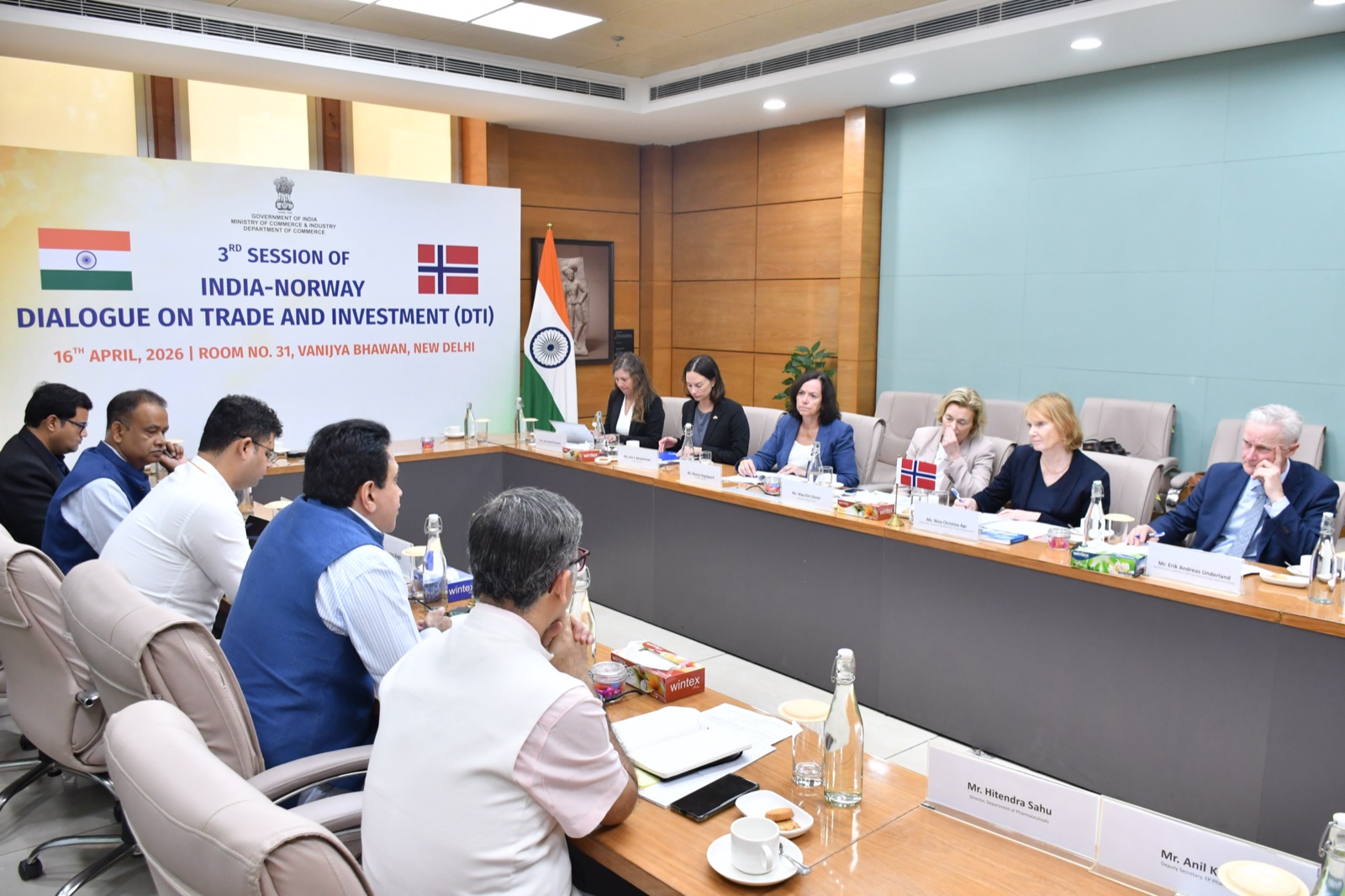
This data framed the 3rd Session of the India–Norway Dialogue on Trade and Investment (DTI), held at Vanijya Bhawan, New Delhi, on 16 April 2026. The meeting carried weight: it was the first DTI since the India–EFTA Trade and Economic Partnership Agreement (TEPA) entered into force on 1 October 2025. (See also: India-Norway trade)
TEPA links India with Switzerland, Norway, Iceland, and Liechtenstein under a single trade framework. The EFTA States have committed to promoting US$ 100 billion in investment into India over 15 years and facilitating one million direct jobs. India has operationalised this with a dedicated EFTA Desk under Invest India. Union Commerce Minister Shri Piyush Goyal has described the agreement as a commitment to shared prosperity and a stronger partnership among the participating countries.
581 Tariff Lines to Zero
The most tangible early dividend of TEPA sits in agriculture. Under Norway’s TEPA schedule, 581 agricultural tariff lines are now classified as duty-free for Indian exporters — covering rice, vegetables, nuts, fruit preparations, honey, marine products, and floriculture. Where baseline data is available, the tariff margins eliminated are substantial: up to 209 per cent on dried vegetables, 75 per cent on floriculture, and 64 per cent on rose cuttings. These are sectors where India’s small farmers, women-led cooperatives, and MSMEs have genuine production depth.
Before 1 October 2025, an Indian floriculture exporter shipping to Oslo faced duties as high as 75 per cent — making it nearly impossible to compete against EU suppliers with preferential access. Under TEPA, that rate is now zero. The official communiqué noted that this duty-free window opens space for women entrepreneurs, farmers, fishermen, and innovation-driven businesses to enter Norwegian value chains for the first time.
Both delegations spent time on the practical plumbing of making these concessions work — sanitary and phytosanitary measures, product registration, certification requirements, rules of origin. These details rarely make headlines, but they determine whether tariff reductions on paper become goods on Norwegian shelves.
What India Actually Ships
India’s top exports to Norway in 2025 tell a diversification story. Pharmaceutical intermediates led at US$ 56 million, followed by grain flour (US$ 33 million), cargo vessels (US$ 33 million), animal feed preparations (US$ 19 million), and motor vehicles (US$ 19 million). This is not a commodity-dependent corridor.
Services trade adds another dimension. India’s services exports to Norway reached US$ 876 million in 2024 — more than double its recorded merchandise exports for that year, driven by IT and professional services. The combined goods-and-services picture is one of a relationship that has quietly grown substantial.
Over the longer arc, Indian trade data shows goods exports to Norway rising from US$ 270 million in 2014 to US$ 439 million in 2025 — a compound annual growth rate of 4.5 per cent. Norway’s own import statistics show the corridor growing from US$ 450 million to US$ 897 million over the same period, a 6.5 per cent annual rate. The divergence is the Rotterdam effect at work.
Energy, Maritime, and Pharma
Beyond tariffs, the DTI explored sectors where the two economies are naturally complementary. Norway has deep expertise in offshore technology; India is modernising its ports. Norway leads in green hydrogen research; India is building out its renewable energy capacity. The discussions covered oil and gas, sustainable shipping, maritime digitisation, pharmaceutical biotech, skills mobility, tourism, and MSME linkages.
Norway’s Government Pension Fund Global — the world’s largest sovereign wealth fund — and Norfund, its development finance arm, already invest in Indian renewable energy projects. Both sides agreed to intensify industry exchanges and business missions.
The October Benchmark
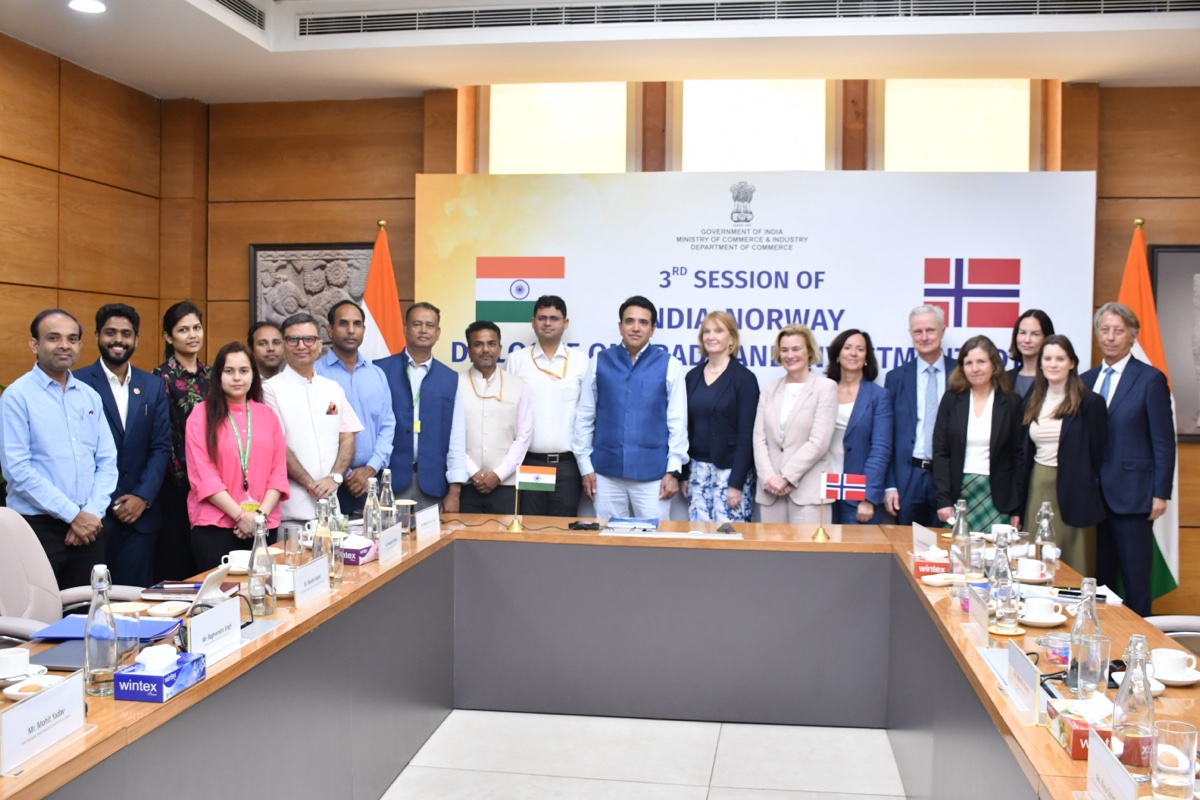
The session’s most consequential forward commitment is the Prosperity Summit 2026, set for 1 October 2026 — the first anniversary of TEPA’s entry into force. The summit will be the first formal reckoning of what the agreement has delivered. How many of those 581 duty-free lines have generated new trade? Is the EFTA investment pipeline on schedule? Where are the bottlenecks? High-level participation from both countries has been confirmed.
Quarterly consultations will track progress between now and then. The next full DTI session moves to Norway in 2028.
The Implementer
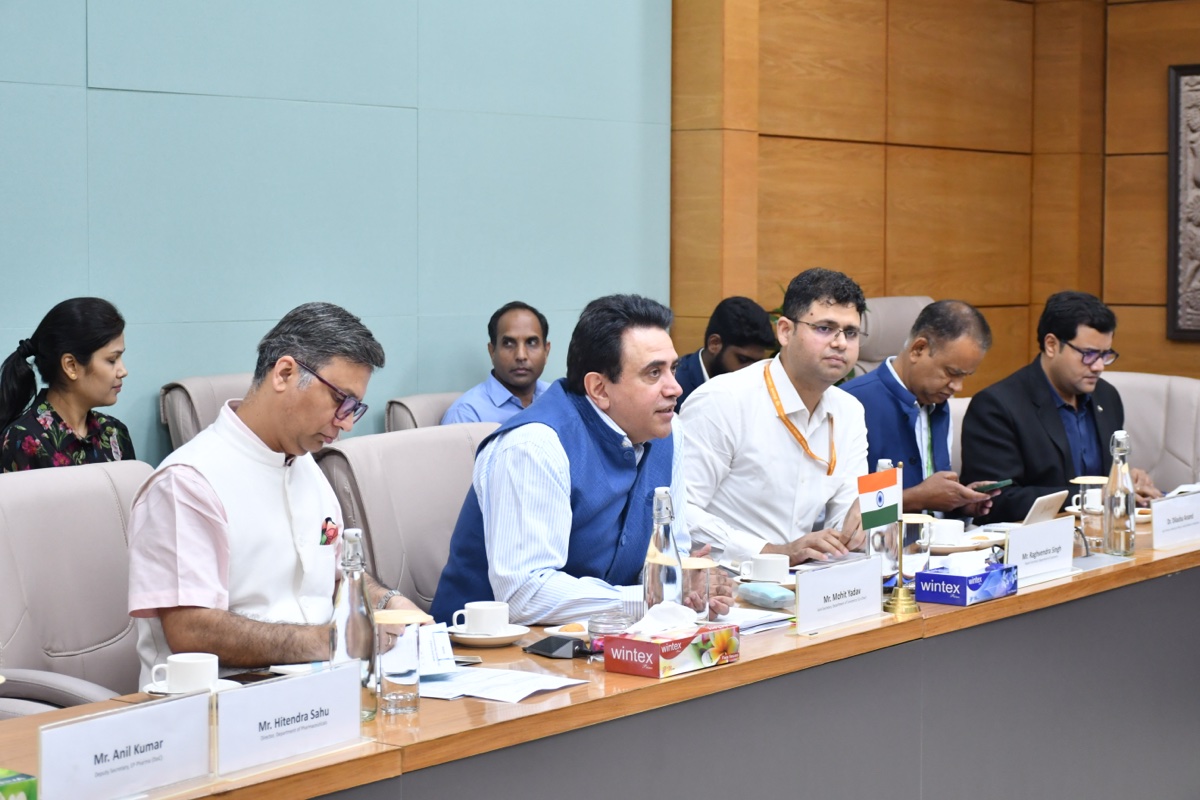
The Indian chair, Shri Mohit Yadav, brings an uncommon profile to the table. A career diplomat from the Indian Foreign Service’s 2002 batch, he spent four and a half years as Consul General in Munich — the longest-serving Indian CG for South Germany — building state-level partnerships with Bavaria’s industrial firms before taking charge of the Europe, CIS, and Pharmaceuticals divisions in the Department of Commerce in November 2024. He now anchors TEPA implementation across all four EFTA States. His counterpart, Ms Nina Christine Rør, is Director General in Norway’s Department of Trade Policy.
Since assuming the pharmaceuticals portfolio in November 2025, Yadav has overseen India’s pharma exports reaching a record US$ 31 billion in FY2025–26. That number explains why pharmaceutical intermediates are already the largest single category in India–Norway goods trade. The open question is whether TEPA can do for rice, honey, and marine products what India’s competitive manufacturing already does for active pharmaceutical ingredients: make Indian supply the default choice in a developed European market.

